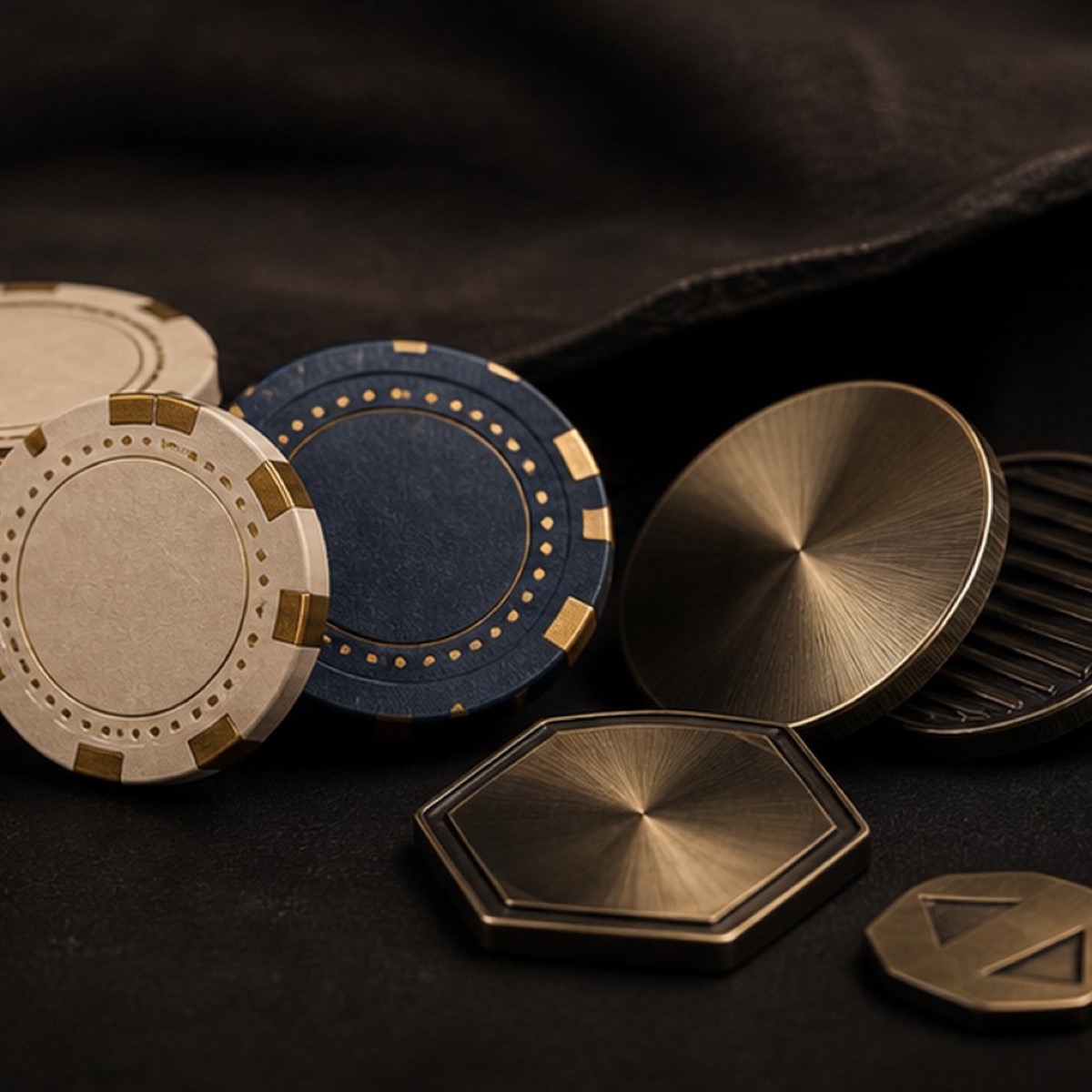
Choose ceramic poker chips if you want sharp printed artwork, clear denominations, and a complete designed set for regular home games. Choose clay or clay-composite chips if your top priority is a softer, textured, more traditional chip feel and you are comfortable comparing product quality closely.
Quick comparison for home games
| Buying factor | Ceramic chips | Clay or clay-composite chips |
|---|---|---|
| Best fit | Designed sets, custom artwork, clear table presentation. | Traditional feel, texture, and a familiar chip sound. |
| Artwork | Often supports full-surface printed graphics. | Often uses inlays, edge spots, or more classic visual treatments. |
| Feel | Smoother and more consistent from chip to chip. | Can feel softer, grippier, and more tactile depending on quality. |
| Buying risk | Compare print quality, edge alignment, denominations, and set contents. | Check whether "clay" means compression-molded, clay composite, or a lower-cost composite chip. |
What "clay poker chips" usually means
Clay poker chips are not usually simple discs made from pure clay. Public material references describe modern clay chips as compositions or compression-molded products that combine clay or earthen materials with other ingredients for durability and feel. In home-game retail, "clay" can also mean clay composite, which varies widely by manufacturer and price point.
That label matters because two products can both say "clay" while feeling very different on the table. If you are buying for a recurring poker night, look beyond the material word and check the chip diameter, weight, denomination printing, edge quality, stackability, case, and included accessories.
What "ceramic poker chips" usually means
Ceramic poker chips are generally bought for the combination of a familiar chip format and printable surface area. They are commonly described as molded chips with graphics printed directly on the chip, which is useful when a set needs detailed artwork, matching denominations, or a more designed visual system.
For home-game hosts, ceramic makes the most sense when the set is part of the table experience. The chips should still be practical: values need to be easy to read, stacks should be countable, and the set should include enough chips for your player count and rebuy plan.
Which material is better for private poker nights?
Neither material is automatically better for every table. Ceramic is often the cleaner choice when you want a complete, design-forward set that looks cohesive on the table and supports clear denominations. Clay or clay-composite can be a strong choice when your group cares most about texture, shuffle feel, and a more traditional sound.
If you are buying your first serious set, prioritize the set as a whole. A good 500-chip format with useful denominations, readable values, cards, dealer button, and storage will usually improve a home game more than chasing one material label in isolation.
Choose ceramic if...
- You want full-surface artwork or a more brand-forward table object.
- You want the chip values to be clear for guests who do not play every week.
- You are buying one complete set for home games, poker clubs, or private nights.
- You care about the case, cards, dealer button, and set presentation as much as material.
Choose clay or clay-composite if...
- You prefer a softer, grippier, more textured handling feel.
- You like traditional edge spots and classic poker-room styling.
- You are willing to compare specific product lines because quality varies under the clay label.
- Your group already knows the exact chip feel it prefers.
The Tells answer
Tells Poker Club starts with ceramic because the first set is built for private home games where design, denominations, and complete setup all matter. The Tells set uses 43mm ceramic chips in a 500-chip format and includes cards, a dealer button, and a case for a polished poker night setup.
Related reading
Continue with the ceramic vs metal poker chips guide, the poker chip denominations guide, and the 300 vs 500 poker chip set comparison.
Sources checked
This guide uses public poker-chip material references from Wikipedia's casino chip construction notes, 888poker's poker chip type overview, Discount Poker Shop's material guide, and Poker Merchant's chip set buying overview. Tells product details come from the Tells Poker Club product context and local product page.