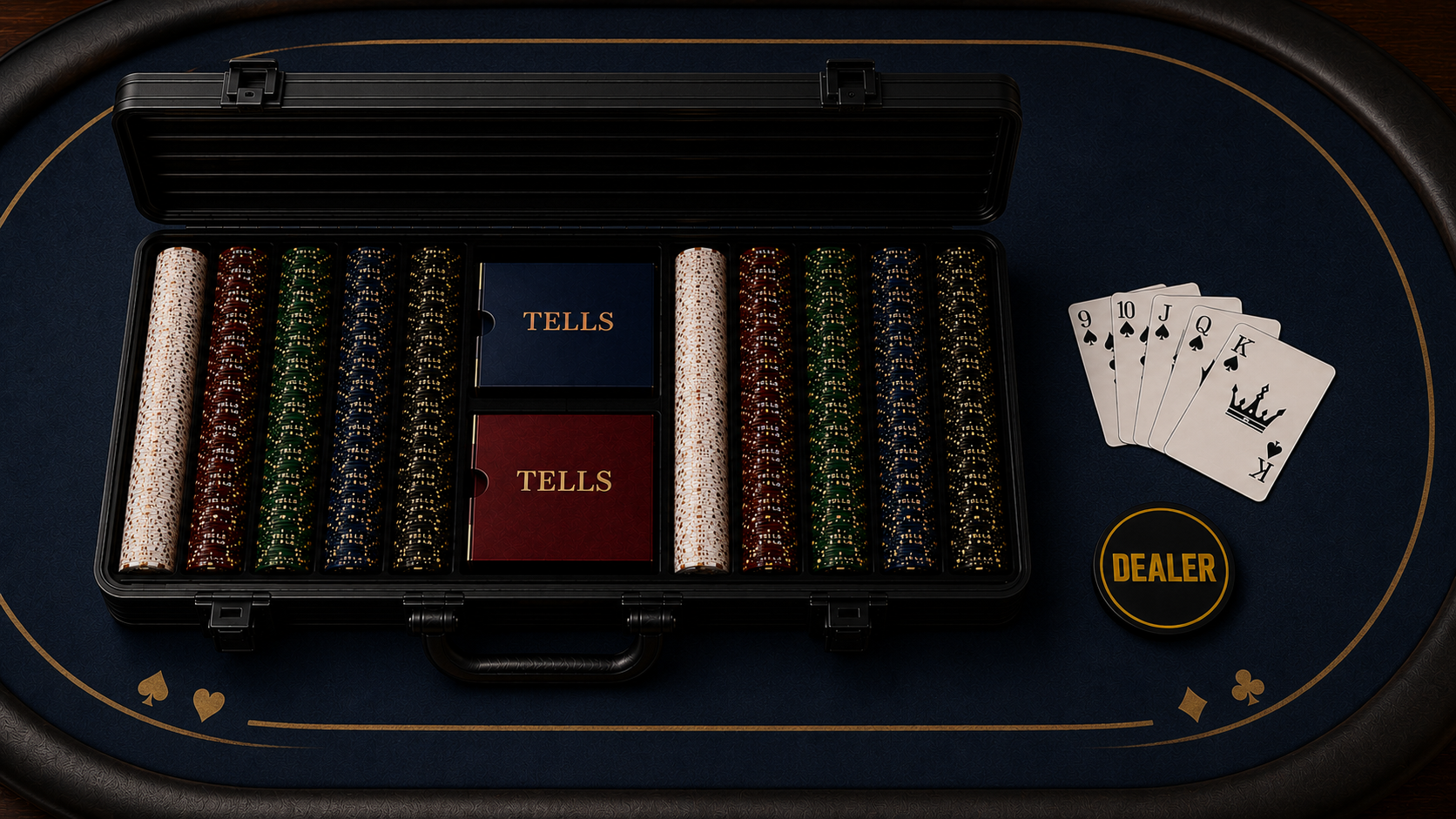
Before buying a poker chip set, choose the game format, number of players, total chip count, denomination mix, chip material, and whether the set includes cards, a dealer button, and a case. For most private home games, a complete 500-chip set is the most flexible starting point.
Quick poker chip set checklist
| Decision | What to check | Why it matters |
|---|---|---|
| Player count | How many seats you regularly fill, plus room for guests. | Four players can use fewer chips. Six to ten players usually need more bank. |
| Game format | Cash game, tournament, or a mix of both. | Cash games need practical values; tournaments need larger point ladders. |
| Chip count | 300, 500, or larger sets. | More chips help with rebuys, deeper stacks, and fuller tables. |
| Denominations | Printed values, colors, and the count behind each value. | The wrong mix can make betting and change-making awkward. |
| Completeness | Cards, dealer button, and fitted case. | A complete set is easier to store, bring out, and use repeatedly. |
Step 1: choose the right chip count
Chip count is the first buying decision because it controls how many players, rebuys, and denominations your set can support. A 300-chip set can work for a small, casual table. A 500-chip set gives most home-game hosts more breathing room without becoming hard to store.
| Set size | Best fit | Watch out for |
|---|---|---|
| 300 chips | Four to six players, short sessions, light rebuys. | Can run tight if the table grows or players rebuy often. |
| 500 chips | Six to ten players, regular home games, mixed cash and tournament nights. | Still needs the right denomination mix; 500 random chips is not enough. |
| 750+ chips | Larger groups, club nights, frequent deep-stack games. | More storage, more sorting, and more cost than most private games need. |
If you are not sure, start with the 300 vs 500 poker chip set guide and the home-game chip count guide.
Step 2: check the denominations
A poker chip set with denominations is easier for new players to read than a blank-color set, but the printed values still need to match your game. For many private cash games, 1, 5, 25, and 100 are practical values. Add 500 only when the table plays deep enough to need a top-end bank chip.
Do not judge a set only by total chip count. A 500-chip set with too many high-value chips can play worse than a smaller set with enough low and middle denominations for blinds, calls, and making change.
Step 3: decide on chip material
Material affects artwork, weight, sound, and the way the set feels on the table. Ceramic chips are useful when you want detailed full-surface artwork and a more designed table object. Clay-style and composite chips can fit buyers who care more about traditional texture or lower-cost availability. Metal poker coins are usually more novelty, themed, or collector oriented than a standard chip set.
| Material choice | Good fit when | Related guide |
|---|---|---|
| Ceramic chips | You want full-surface artwork, crisp printed values, and a polished private-game look. | Ceramic vs clay |
| Clay-style chips | You prefer a more traditional chip feel and do not need full-face artwork. | Ceramic vs clay |
| Metal or insert chips | You are comparing weight, novelty coins, or lower-cost composite chips. | Metal in poker chips |
Step 4: check case, cards, and dealer button
The case is part of the product, not just packaging. A good case keeps the chip bank organized, protects the pieces, and makes setup feel intentional. Cards and a dealer button also matter because they help the game start cleanly without a last-minute search for missing accessories.
Step 5: decide whether design matters
If you only need chips for one night, design may not matter. If the set will live on a shelf, come out repeatedly, or be part of the room, the visual language is part of the value. A private-game set does not need to imitate a casino table. It should make your table easier to read and more memorable for the people who actually play there.
Common buying mistakes
- Buying the largest-looking case without checking the denomination mix.
- Choosing a 300-chip set for a table that regularly reaches eight or more players.
- Buying undenominated chips when new players need clear values.
- Ignoring the case, cards, and dealer button until game night.
- Choosing a generic casino-style design when the set is meant for a private room, gift, or club identity.
Where Tells fits
Tells Poker Club is building a premium 500-chip ceramic poker chip set for private home games. The first set includes 43mm ceramic chips, two boxes of poker cards, a dealer button, and a case, so the purchase is built around the complete table rather than only a tray of chips.
The fit is strongest when you want a designed, brand-forward set for recurring poker nights, clubs, gifting, or a table that should feel more considered than a generic mass-market kit.
FAQ
What should I look for in a poker chip set?
Look for enough chips for your player count, denominations that match your game, a material you like, and accessories that make setup easy. For home games, the practical details matter more than a large-looking case.
Is a 500-chip poker set enough?
A 500-chip set is enough for many six-to-ten-player private home games, especially when the denomination mix supports low values, middle values, and rebuys. Very large or deep games may need more.
Should I buy numbered poker chips?
Numbered chips are useful when guests are learning, when the table uses cash-game values, or when you want faster counting. Blank chips can work, but the host must explain and enforce the value map.
Related reading
Continue with the best poker chip set guide, compare custom vs standard poker chips, review poker chip denominations, or calculate how many chips your table needs.