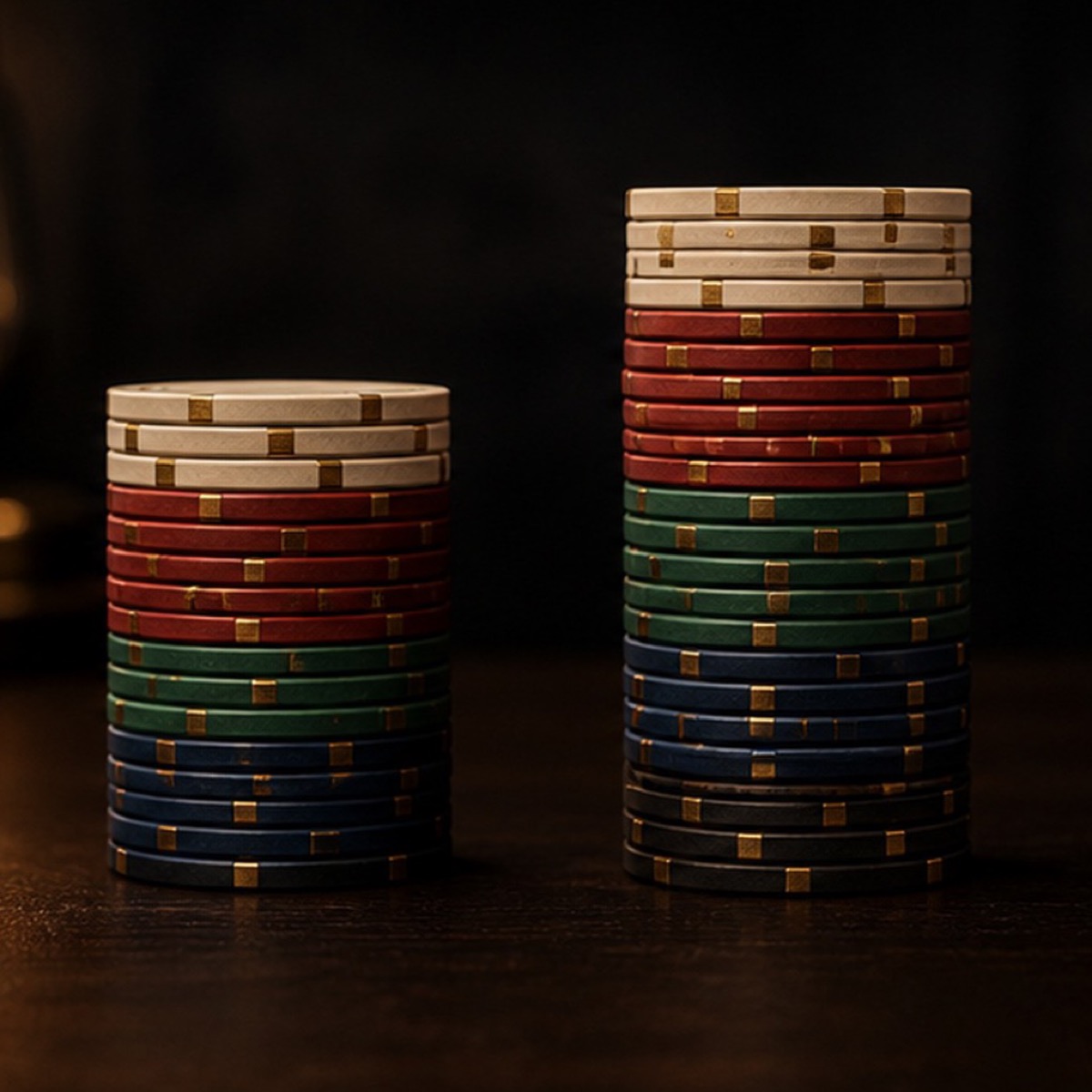
For a home poker tournament, use 25, 100, 500, 1000, and 5000 chip values, start each player with 10,000 to 20,000 in chips, and run 15- to 20-minute blind levels. A 500-chip set gives the host enough total chips for starting stacks, rebuys, and color-ups when the denominations are planned clearly.
| Best format | Single-table tournament for 6 to 10 players with a clear start and end. |
|---|---|
| Starting stack | 10,000 for a faster night, 20,000 for a deeper and more social game. |
| Blind levels | 15 minutes for a two-hour game, 20 minutes for a more relaxed pace. |
| Chip values | 25, 100, 500, 1000, and 5000 keep stacks readable without too many colors. |
Start with the kind of night you want
A tournament is best when everyone can arrive near the same time and stay until the final few players finish. If guests will come and go, a low-stakes cash game is usually easier. If the group wants a defined winner, a simple tournament gives the night a cleaner arc.
For most private games, avoid complicated structures. One table, one buy-in, one optional rebuy period, and a fixed blind schedule are enough. The host should be able to explain the setup in under a minute.
Recommended starting stacks
The starting stack should feel deep enough for real decisions but not so deep that the night runs past the group's attention span. A 10,000 stack works well for a tighter weeknight game. A 20,000 stack gives guests more room to play during a longer weekend poker night.
| 10,000 stack | 8 x 25, 8 x 100, 6 x 500, and 6 x 1000. |
|---|---|
| 15,000 stack | 8 x 25, 8 x 100, 8 x 500, 5 x 1000, and 1 x 5000. |
| 20,000 stack | 8 x 25, 8 x 100, 8 x 500, 5 x 1000, and 2 x 5000. |
Use chip values that stay readable
Tournament chips do not need to map to cash. They need to make betting, blind increases, and color-ups easy to follow. Starting at 25 keeps the table from drowning in tiny chips, while 5000 chips make larger stacks manageable later in the night.
If your set is mostly used for cash games, keep a separate written setup for tournaments. Mixing cash values and tournament values is one of the fastest ways to confuse newer players.
Blind schedule for a private game
A home tournament should end before the table gets tired. The easiest structure is to start at 25/50, increase every 15 to 20 minutes, and remove 25 chips once they stop mattering. The schedule below works for a casual single-table night.
| Level 1 | 25 / 50 |
|---|---|
| Level 2 | 50 / 100 |
| Level 3 | 100 / 200 |
| Level 4 | 200 / 400 |
| Level 5 | 300 / 600, then color up 25 chips during the break. |
| Level 6 | 500 / 1000 |
Rebuys and add-ons
Rebuys can keep eliminated guests involved, but they need a cutoff. For a clean home setup, allow one rebuy during the first three or four levels, then close the rebuy window. That protects the ending and keeps the prize or bragging-rights structure easy to understand.
If the group is newer, skip add-ons. They add admin work without improving the night. A single starting stack and one optional rebuy is easier for guests to follow.
What a 500-chip set should cover
A 500-chip set is the right size for most home tournament setups because it can support a full table, rebuys, and late-stage color-ups without making the host ration chips. The important part is not just the total count, but having enough useful denominations in the case or a clear written value assignment for tournament nights.
Tells Poker Club is built around a complete 500-chip ceramic set for private games, with denomination feedback collected during presale. The set includes 43mm ceramic chips, cards, a dealer button, and a case, so a host can build a polished table without mixing a chip set from one brand with accessories from another.
Home tournament checklist
- Choose cash game or tournament format before inviting guests.
- Set starting stacks, blind levels, and rebuy rules in advance.
- Sort chips into starting stacks before the first hand.
- Put the dealer button, cards, and extra chips within reach.
- Plan a break around the first color-up so the table stays organized.
Related reading
If you are still choosing the right case size, read 300 vs 500 poker chip set. For cash-game values, use the poker chip values for home games guide. For a broader set checklist, compare the poker chip set buying guide.