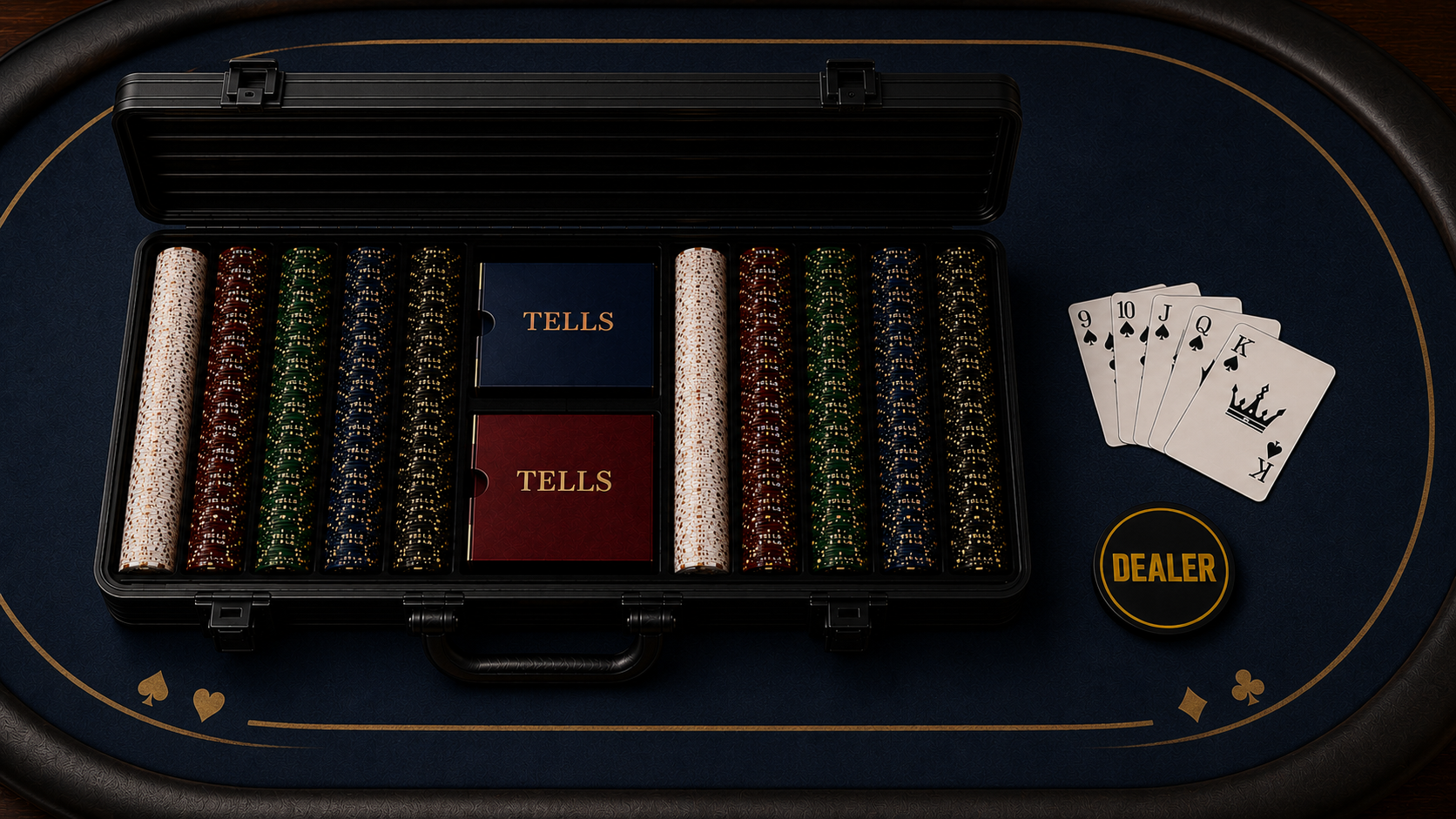
The poker dealer button marks the dealer position for the hand. In Texas Hold'em and similar flop games, the small blind sits immediately to the left of the button, the big blind sits to the left of the small blind, and the button usually acts last on post-flop betting rounds.
What is the dealer button?
The dealer button is a small puck or disc that sits in front of one player. In a casino, a dedicated dealer may deal every hand, but the button still shows which player has the nominal dealer position. In a self-dealt home game, the button can also show who should deal the cards.
The button matters because poker is positional. It anchors the blinds before the hand starts, then helps the table know who acts first and last during the betting rounds. Without it, new players often lose track of blinds, turns, and who should deal next.
Where do the blinds go?
In a normal multi-player Texas Hold'em home game, the small blind is posted by the first active player to the left of the dealer button. The big blind is posted by the next active player to the left of the small blind.
| Seat | Role before cards are dealt | Simple home-game note |
|---|---|---|
| Button | Dealer position for the hand. | Usually acts last after the flop, turn, and river. |
| Left of button | Small blind. | Posts the smaller forced bet before seeing cards. |
| Left of small blind | Big blind. | Posts the larger forced bet and closes pre-flop action if no raise occurs. |
| Left of big blind | First pre-flop action. | Acts first once hole cards are dealt. |
How the button moves after each hand
For a friendly private game, keep the movement simple: after each completed hand, move the dealer button one active seat clockwise. The blinds then follow from the next two active seats to the left. This keeps the cost of blinds and the advantage of acting late moving around the table.
Tournament rulesets can use more precise dead-button procedures when players bust or seats open. A home game rarely needs to debate edge cases in detail, but it should keep the big blind moving fairly and avoid making one player pay the big blind twice in a row because the table forgot to move the button.
Heads-up button and blinds
Heads-up poker is the common place where new hosts get confused. When only two players remain, the button posts the small blind and the other player posts the big blind. The button acts first before the flop, then acts last after the flop.
Quick heads-up rule: button equals small blind. The non-button player is the big blind. After the flop, the button has position and acts last.
Dealer button setup for a home game
The button should be visible, easy to move, and separate from the chip stacks. Put it in front of the current dealer position, not buried in the pot or mixed with a player's chips. If your group is learning, say the roles out loud for the first orbit.
| Before the first hand | What to decide | Why it prevents confusion |
|---|---|---|
| Starting button | Draw a high card, pick the host, or assign a random seat. | Gives everyone a neutral starting point. |
| Blind size | Set small blind and big blind before chips are issued. | Connects the button to the chip values and starting stacks. |
| Movement rule | Move one active seat clockwise after every hand. | Keeps late position and blind costs rotating. |
| Dealer duty | Decide whether the button player deals or one host deals every hand. | Separates card handling from betting position when needed. |
Common button mistakes
- Forgetting to move the button after a hand ends.
- Letting the button disappear into the pot or a chip stack.
- Posting blinds from the wrong side of the button.
- Treating heads-up blinds the same as a full table.
- Changing the blind level without telling the full table.
- Using no physical button and relying on memory after players change seats.
How the button connects to chip planning
The dealer button and chip values work together. The button tells players where the forced bets begin, and the chip set needs enough small denominations to post those blinds smoothly. If your blinds are $0.25/$0.50, the table needs enough low-value chips for blinds, calls, and change. If your tournament blinds rise every 15 or 20 minutes, the set needs values that scale cleanly.
That is why dealer-button questions usually lead into chip-count and denomination questions. Once a host understands where the button sits, the next practical decision is whether the set has enough chips for the blinds, players, rebuys, and late-night stacks.
Where Tells fits
Tells Poker Club is built for private poker nights where the table should feel organized before the first hand. The first Tells set includes 500 premium ceramic 43mm chips, two boxes of poker cards, a dealer button, and a case, so hosts do not have to assemble the basic table pieces one accessory at a time.
Related reading
For the next setup decisions, read the poker chip values guide, poker chip denominations guide, and 500-chip set breakdown.
Sources checked
This guide cross-checks button, blind, and action-order basics against the Poker TDA rules on button movement, public blind-position references, and Upswing Poker's blinds, antes, and button explainer. Tells product details come from the Tells Poker Club product context and local product page.